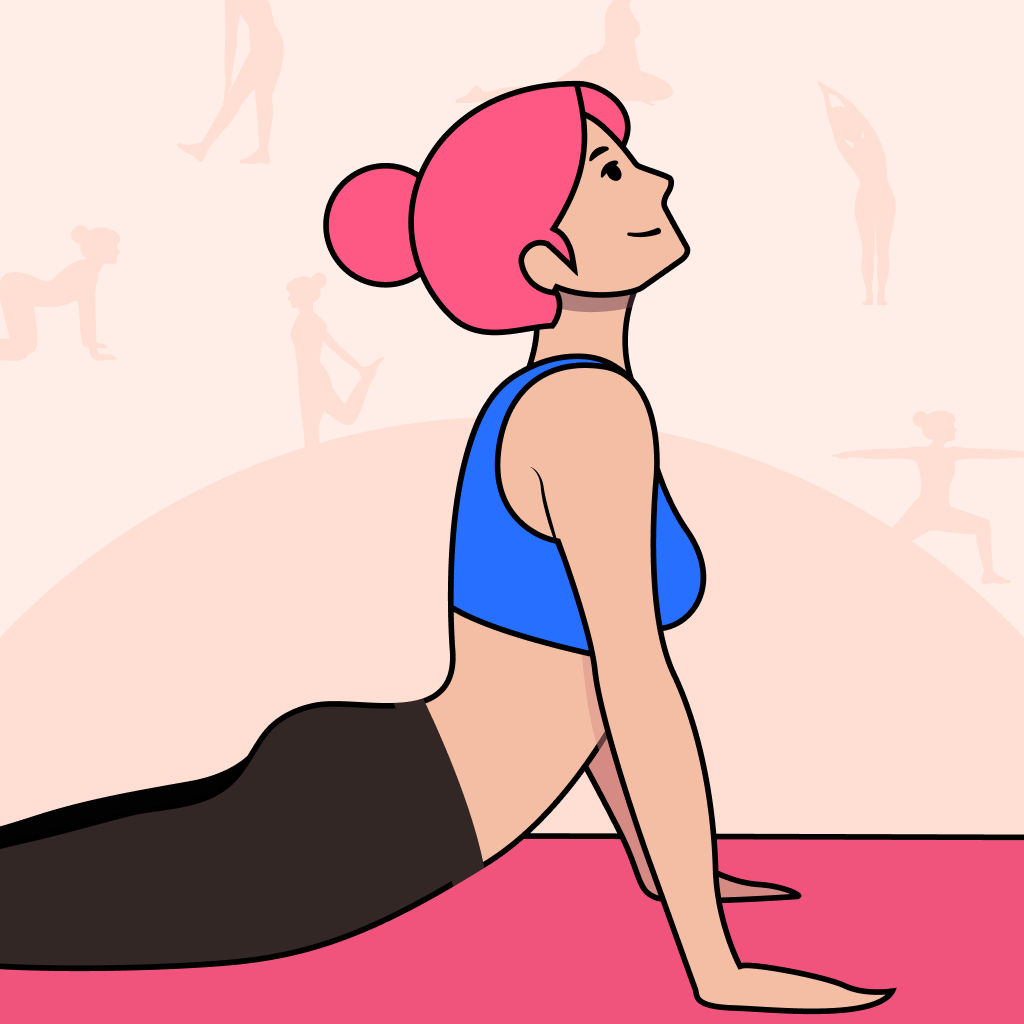
 Flexi Stretch
Flexibility and mobility
This is the obvious one, and the one that responds fastest. Regular static stretching increases how far a joint will comfortably travel — partly by changing the tissue over time, and substantially by changing your nervous system's tolerance to the sensation. Your body stops treating end range as a threat.
The practical version: putting on socks stops being an event, reaching the back seat of the car stops involving a wince, and getting up off the floor stops requiring a plan. Those are the changes people actually notice.
Everyday aches
Most ordinary stiffness — lower back, neck, hips — comes from holding one position for too long rather than from damage. Muscles adapt to the length you keep them at, and the ones that shorten pull other structures into positions they then have to work to maintain. That work is the ache.
Stretching addresses this directly, but the useful move is often upstream of where it hurts: tight hip flexors are a very common cause of lower back tightness, and a tight chest is usually behind an aching neck.
Posture and body awareness
Stretching alone will not give you a new posture — that needs strength as well. What it does give you is range and awareness: you cannot stand upright if your chest will not let your shoulders back, and you rarely notice you are hunched until something makes you check. A daily routine builds both the range and the noticing.
Stress, sleep and energy
Ten minutes of slow stretching with steady breathing is a reliable way to shift out of a sympathetic, wound-up state. The breathing pattern does a lot of the work — long exhales, no rush, attention on one thing.
Many people find an evening routine helps them fall asleep more easily, and that the physical restlessness of a day spent sitting settles. Whether that is the stretching, the breathing, or ten minutes away from a screen is somewhat beside the point.
Sport and recovery
- Range where you need it. A deeper squat, a fuller running stride, a shoulder that gets overhead without compensating.
- Fewer of the niggles that come from asymmetry. Chronically short tissue on one side is a reliable source of the small injuries that interrupt training.
- Circulation and recovery. Gentle movement between hard sessions tends to leave people feeling better the next day.
- Balance and coordination. Controlling your body through a wider range is a skill, and it transfers.
One caveat worth knowing: long static holds immediately before an explosive effort can slightly reduce power output. Warm up with movement; save the long holds for afterwards or for a session of their own.
A realistic timeline
Session one
Immediate looseness
You will feel better at the end of the first session. This is real, and it is mostly temporary — which is why the daily part matters.
Weeks 1–2
Less morning stiffness
The first durable change most people report: waking up less locked-up than they used to.
Weeks 3–4
Measurable range
Positions that were a struggle become routine. This is where most people first think "oh, it's working."
Weeks 6–12
The aches recede
Long-standing lower back or neck tightness tends to change on this timescale, not faster. Slow, but this is the one that matters.
Consistency beats intensity, every time. Ten minutes six days a week comfortably outperforms an hour on Sundays. It is also the harder discipline, which is why streaks, a fixed time of day and one daily reminder are worth more than a more ambitious plan.
Common questions
How long should I stretch each day?
Ten minutes is the practical sweet spot — enough to cover the whole body at 30 seconds per stretch, short enough to survive a busy week.
Is stretching enough on its own?
For mobility, comfort and stiffness, it does a lot. It is not a substitute for strength work or cardiovascular exercise, and it will not build muscle. Think of it as the layer that makes the rest feel better.
Does stretching prevent injury?
The evidence is more nuanced than the folk wisdom. A proper warm-up matters more for acute injury than pre-exercise stretching does. Regular stretching does appear to help with the chronic, overuse kind that comes from restricted range.
Can I be too flexible?
Yes — hypermobility is a real thing, and for those people the priority is strength and control through range rather than more range. If your joints already move a long way easily, work on stability first.
Morning or evening?
Whichever you will actually repeat. Evening tends to feel easier because you are warm and moved; morning tends to be easier to protect from the rest of the day.